
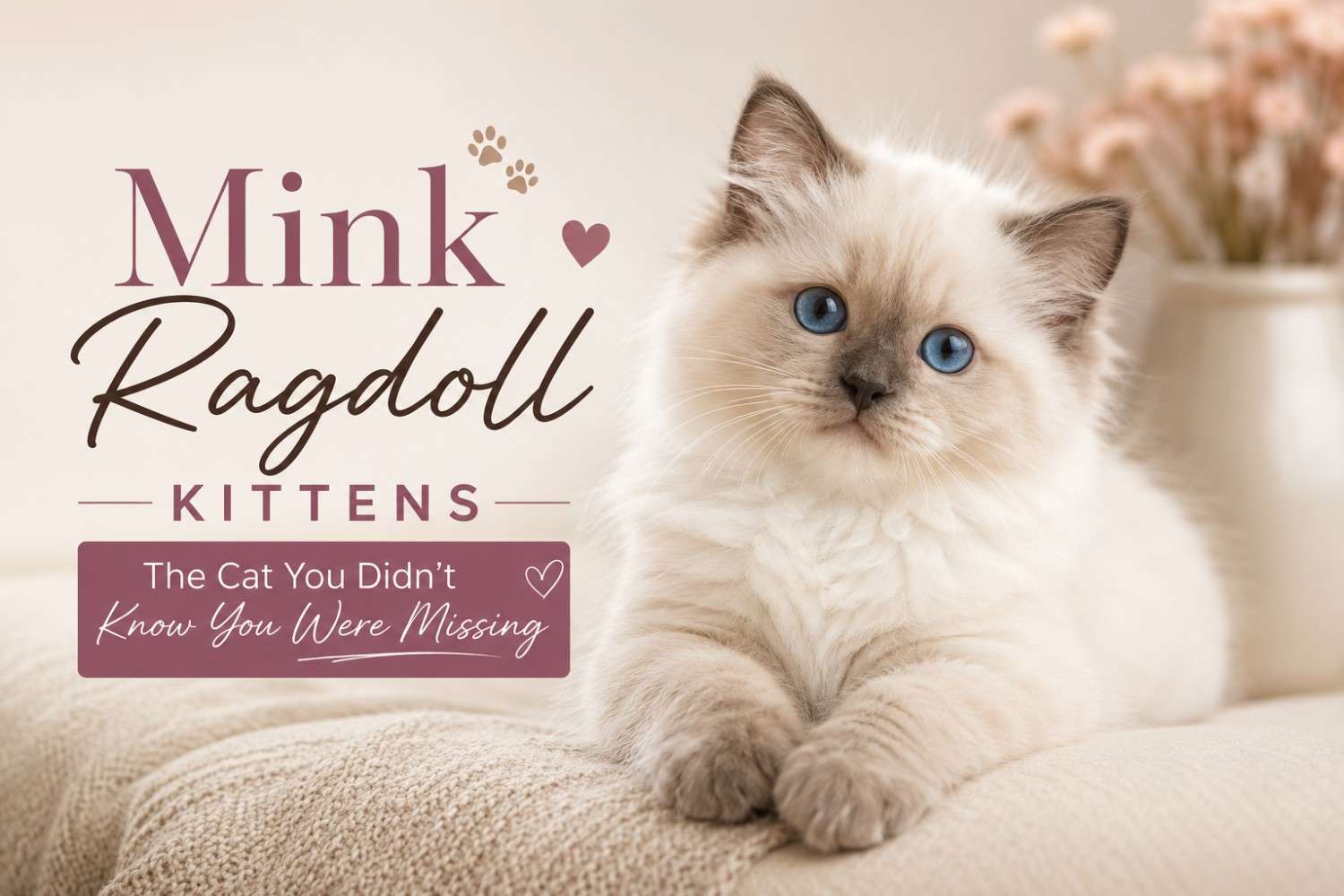
There’s a moment that almost every Ragdoll owner describes the same way. They’re sitting on the couch, minding their own business, and suddenly there’s this warm, heavy little presence beside them not demanding attention, not meowing, just… there. Settled. Content. And somehow, without any grand announcement, this cat has become the most comforting part of their day.
That’s the Ragdoll effect. And when the cat in question is a Mink Ragdoll, that effect comes wrapped in one of the most visually stunning coats in the feline world.
If you’ve been casually curious about this breed and want the real, honest picture, the personality, the care, the quirks, and what sets Mink Ragdolls apart you’re in the right place. Let’s get into it.
What Exactly Is a Mink Ragdoll Kitten?
The word “Mink” confuses a lot of people when they first hear it in the context of Ragdolls. It’s not a separate breed. It’s a genetic variation within the Ragdoll breed itself, one that produces some pretty remarkable differences in how the cat looks and develops.
Traditionally bred Ragdolls carry what’s called the “cs” gene, which means their color develops slowly and subtly, often taking up to three years to fully mature. Mink Ragdoll kittens, on the other hand, carry a “cb” gene inherited from Burmese ancestry that produces deeper, richer pigmentation from the very start. A Mink kitten is already beautifully colored at birth. Their markings are clear, their contrast is striking, and they only get more dramatic with age.
Beyond color, the coat itself has a different quality. It’s thicker, denser, and carries a subtle sheen that genuinely looks like well, mink fur. When light catches a Mink Ragdoll the right way, it’s the kind of thing that makes visitors stop mid-sentence.
And then there are the eyes. Traditional Ragdolls have blue eyes. Mink Ragdolls tend toward aqua, a layered, blue-green shade that seems to shift depending on the light. It gives them an almost mythological look, like a cat out of a storybook.
The Temperament That Makes People Become “Cat People”
There’s a running joke among Ragdoll owners that these cats are secretly dogs in disguise. It’s not entirely wrong. The Ragdoll breed and Mink Ragdolls especially, given their slightly more expressive coloring and often bolder personality tends to behave in ways that catch first-time cat owners completely off guard.
They come when called. Not always, because they’re still cats, but often enough that it surprises you. They learn their names quickly. They notice when you’re upset and tend to gravitate toward you in those moments without making a fuss about it. They don’t knock things off tables for entertainment. They don’t scratch your furniture out of spite.
What they do, consistently and wholeheartedly, is show up. Wherever you are in the house, they’ll eventually drift into that room. Not to bother you just to be near you. It’s a kind of quiet loyalty that you don’t expect from a cat, and once you’ve lived with it, going back to a less people-oriented breed feels like something’s missing.
They’re also genuinely patient. With children who don’t always handle them perfectly. With other pets figuring out the pecking order. With new environments and strangers. This patience comes from generations of deliberate breeding for temperament, not just appearance and it’s one of the reasons Ragdolls remain one of the most popular breeds for families with young kids.
A Day in the Life With a Mink Ragdoll
Here’s what nobody tells you before you bring one home: these cats will reorganize your daily routine without you even noticing.
Mornings become slightly longer because they want to be part of them. You’ll find yourself pausing to let them investigate whatever you’re doing in the kitchen. Evenings on the couch are rarely solo anymore. Bedtime gets a little more negotiated.
None of this is demanding in the traditional sense. They’re not loud. They’re not destructive. They don’t have the frenetic energy of a Bengal or the neediness of a Siamese. But they are present genuinely, warmly, persistently present and that changes the texture of your home in the best possible way.
They do need engagement. Interactive toys, some daily play time, and human company matter to them. A Mink Ragdoll left alone for very long stretches regularly can develop anxiety or become withdrawn. They’re social creatures, and they thrive when they’re part of the rhythm of family life rather than existing on the edges of it.
Health Considerations Worth Knowing
Responsible ownership starts before the kitten even comes home, and that means understanding what health considerations the Ragdoll breed carries.
Hypertrophic cardiomyopathy, or HCM, is the most talked-about health concern in Ragdolls, it’s a heart condition that affects the breed at higher rates than average. Reputable breeders screen for this. When you’re looking at breeders, ask directly whether their cats are tested for HCM and ask to see documentation. A breeder who hedges or changes the subject is a breeder worth walking away from.
Beyond HCM, Ragdolls are generally a sturdy, long-lived breed. With proper nutrition, regular vet visits, and a safe indoor environment, Mink Ragdoll kittens routinely live into their mid-teens. Some live well beyond that.
Their coats require some upkeep not daily brushing, but a few times a week to prevent matting, especially around the collar area and behind the ears. They shed seasonally, so a good deshedding brush during those periods saves your furniture and their digestive system from hairballs.
What to Look for in a Mink Ragdoll Breeder
This is where a lot of people get tripped up, and it’s worth spending time on. The internet is full of listings for Ragdoll kittens, and not all of them are what they seem. Pricing that looks unusually low, photos that seem pulled from stock image sites, and sellers who push for quick payment without encouraging questions are all things to watch for.
A genuine breeder raises kittens inside their home, not in a cattery separate from daily life. Kittens raised in real living spaces around noise, movement, children, and other animals develop confidence and social skills that kittens raised in isolation simply don’t have. That early socialization isn’t optional; it shapes who the cat will be for the rest of its life.
At Ragdoll Kittens For You, Dr. Jennifer Creed raises every litter in exactly that kind of environment: a busy family farmhouse west of Chicago, shared with four children, four dogs, and the kind of loving chaos that produces genuinely well-adjusted kittens. Her background as a practicing small animal veterinarian means the health side isn’t an afterthought. Every kitten is TICA registered, DNA tested, vaccinated, and sent home with a written health guarantee.
That combination of veterinary expertise and genuine home-raised socialization is rarer than it should be in the breeding world. It’s also why so many families come back when they’re ready for a second cat.
Is a Mink Ragdoll Right for You?
Be honest with yourself here, because these cats deserve a home that suits them.
If you travel constantly, work 14-hour days, and want a pet that’s mostly self-sufficient a Mink Ragdoll might not be the best match. They want company, and they notice its absence.
But if you’re home regularly, if you have a family with children, if you’ve been looking for a cat with genuine warmth and personality rather than just a decorative presence in your home then yes. A Mink Ragdoll kitten will fit into your life like it was always meant to be there.
And one day, not long after they’ve settled in, you’ll be sitting on the couch and feel that familiar warm weight settle in beside you. Quiet. Content. Completely at home.
That’s the moment you’ll understand what all the fuss is about.
