
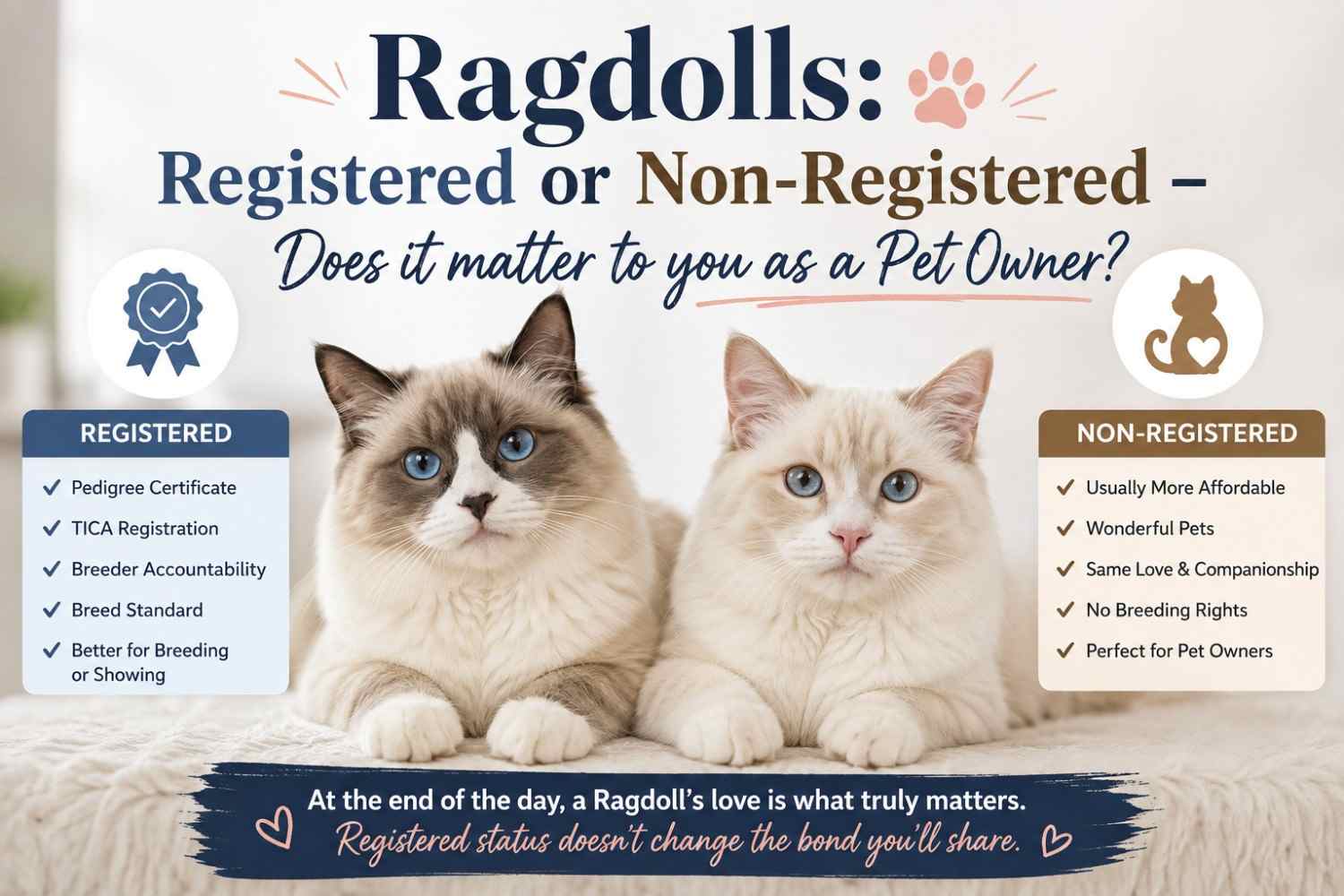
If you have done any research into Ragdoll Kittens then you have probably come across the term “TICA registered” more than once. Some breeders are sure to show it. Some people don’t speak of it. And if you just want a loving companion, not a show cat, you might be asking yourself, does any of this matter to me?
It’s a fair question. The registration paperwork can feel like a formality that’s more about breeders and cat shows than the kitten curled up in your lap. But the truth is a little more nuanced — and knowing what TICA registration actually does (and doesn’t) guarantee can help you make a more informed decision, no matter your reasons for bringing a Ragdoll home.
What Does TICA Registration Really Mean?
TICA, The International Cat Association, is one of the largest registries of pedigreed cats in the world. As a TICA registered breeder, the cattery, and the litters born from it, are registered with TICA’s official registry, with pedigrees traced back through recognised Ragdoll bloodlines.
In practical terms, a TICA registered Ragdoll has paperwork to prove that:
- Breed authenticity. The kitten is given documented, traceable lineage, verifying it comes from purebred Ragdoll parents and not from a mixed or unverified background.
- Cattery Accountability. Registered breeders adhere to TICA’s code of ethics, which outlines standards for breeding practices, cattery conditions, and record-keeping.
- History of pedigree. You can see back several generations which is important if you are interested in show quality lines, certain colour genetics or just want to know your kitten’s full family tree.
But non-registered Ragdolls can be perfectly healthy, purebred-looking cats with no third-party documentation to prove it. You are trusting the breeder completely. ## If You Just Want a Pet, Is It Important?
That is where opinions really diverge, and it’s worth being honest about it.
If your goal is just a loyal, affectionate companion – not a show cat, not a breeding cat – a non-registered Ragdoll from a reputable, transparent breeder can absolutely make a wonderful pet. Registration status alone does not dictate temperament, health, and how much a kitten will love curling up next to you on the couch.
That said, registration tends to correlate with other things that do matter to pet owners, even ones with no interest in showing or breeding:
- It’s a sign of serious, accountable breeding. Breeders who complete the TICA registration process are typically more committed to doing things properly: health testing, ethical breeding, and honest record-keeping. It’s not a sure thing, but it’s a significant data point.
- It protects you against misrepresentation. Sadly, the popularity of Ragdolls has led to kittens being sold as ‘Ragdoll’ or ‘Ragdoll mix’ with no actual evidence to support it. It provides you with something tangible to support the breed claim, rather than taking a listing at face value.
- Resale and lifetime value – if that ever matters.Even owners of cats with no plans to breed or show may at some point need documentation, for insurance reasons, for peace of mind, or just because they want to know the background of their cat. Registered kittens have that option built in, non-registered ones don’t usually.
- It often comes with better overall breeder practices. Responsible breeders may provide health testing information relevant to their breeding program, including screening for hereditary conditions associated with the breed. Ask specifically which tests have been performed and request documentation where appropriate.
Many TICA-affiliated breeders follow established breed and registration standards, but registration alone should not be treated as a guarantee of breeding practices, health testing, or kitten welfare.
Thus, registration is one helpful signal among many—not a replacement for doing your own due diligence.
Questions You Must Ask, Whether or Not Registered
Whether or not you are viewing a TICA-registered litter, the questions that really protect you as a buyer are mostly the same:
- Have the parent cats been health tested for HCM (Hypertrophic Cardiomyopathy) and PKD (Polycystic Kidney Disease)?- Can I see the kittens play with their mother and littermates?
- What does the health warranty cover and for how long?
- Are they willing to answer questions and do they ask you questions about your home?- Can they provide testimonials or reviews from past buyers?
A TICA registration certificate can help support a “yes” to breed authenticity—but a good breeder will welcome all these questions regardless of their registry.
The Bottom Line
Pet owners who are interested in health, temperament, and companionship alone don’t need TICA registration, but it’s rarely a bad sign, and it often comes with the exact practices (health testing, transparency, documented lineage) that matter most when choosing a breeder. If you care at all about your cat’s pedigree, future breeding, or just want the extra comfort of a third-party verification, working with a TICA-registered cattery gives you that option, with no downside.
Registered or not, the real priority is finding a breeder who is transparent, health-conscious and genuinely invested in where their kittens end up. The paperwork should reinforce that trust — not substitute for it.
